The European Union is an economically attractive area for agricultural activity and farming development. Choosing the most advantageous jurisdiction depends not only on a region's climate and competitive market, but also on a country's tax and legal framework. A careful comparison of tax regimes for agribusiness in the EU by the experts of the international law firm Maira Consult will help you build a sound strategy for successful, long-term profitability.
A defining feature of the EU tax regime for agricultural holdings and family farms is that a significant share of the budget is allocated to preferences and subsidies that support business. When choosing an EU country for an agricultural company, it is necessary to study tax rates, the structure of farming operations, and the availability of special incentives. Taking these factors into account, the Maira Consult strategic analysis team considers the best options to be Poland, Bulgaria, Hungary, and Romania. Comparing tax regimes for agribusiness in these countries makes it possible to choose the optimal environment for a quick start and for achieving commercial goals.
Poland's Tax Policy for Farms

A distinctive feature of the Polish tax system is its special approach to taxing agricultural activity. Income of individuals from ordinary farming is, as a rule, not subject to PIT, and income of legal entities from such activity is exempt from CIT, except for certain special areas of agricultural production. At the same time, owners and users of agricultural land pay the Podatek rolny land tax, the amount of which depends on the standard area of the land and the average purchase price of rye announced by the Polish statistical office GUS.
For farmers in Poland, there is a separate social insurance system, KRUS, which under certain conditions allows contributions to be paid at a lower rate than under the general ZUS system. Farmers and their family members who meet the criteria set by law may join it. KRUS contributions are determined under special rules and depend, among other things, on the type of insurance and the characteristics of the farm.
Polish agribusiness holds a leading position in receiving European subsidies from the European Union. Moreover, subsidies are exempt from taxation, which supports effective tax optimization and budget planning for Polish companies in the agricultural sector.
Taxation in Bulgaria for Agriculture
When comparing tax regimes for agribusiness in the EU, Bulgaria attracts farmers with its low tax rate. Income tax for sole proprietors and the Corporate Income Tax rate for companies registered in Bulgaria are only 10%. A tax of just 5% is paid on dividends distributed to individuals, which is why Bulgaria is chosen as one of the best jurisdictions for reinvesting capital.
Municipal Incentives for Agribusiness
The state provides preferential regimes for Bulgarian agribusiness:
a preference in the form of a reduction of up to 60% of corporate income tax for farms engaged in producing unprocessed animal and plant products;
deduction of standard expenses of up to 60% of total income for sole proprietors, which allows paying the 10% tax only on the remaining 40% of profit after the deduction;
the "gas oil" scheme provides for a refund of excise duty to agricultural producers on diesel fuel they purchase and use for agricultural tasks;
a zero rate on income from leased land;
export-oriented farms benefit from a 0% VAT rate on export operations.
State subsidies are not included in the taxable turnover.
Taxes in Hungary for Agribusiness

The Hungarian government provides significant advantages for large agribusinesses and small farms:
corporate income tax of 9%, the lowest rate in the European Union;
agricultural products and farm food products are subject to a reduced VAT (5/18%);
taxation of land plots falls within the competence of municipalities, which set the relevant local taxes within the limits of the law.
To optimize the tax burden, an amount of up to 100% of profit may be transferred to a reserve fund designated for the development of a company in Hungary. This amount is not taxable. Tax losses can be carried forward for five years, with their use limited to 50% of the tax base of the relevant year.
Household farms and small agribusinesses may, at their discretion, choose a simplified taxation scheme. The rate in this case is 10% on the modified internal rate of return. Financial and accounting reporting is also simplified.
Taxation of Agricultural Business in Romania
Romania's tax policy toward the agricultural sector is very loyal. The main advantage is strategic state support, which includes a reduced VAT. Companies supplying fertilizers, feed, seeds, and livestock can apply a reduced VAT rate of 11%. The same rate applies to certain categories of food products.
The current Income Norm mechanism allows small agribusinesses and private farmers to calculate taxable income based on state-established norms, depending on the type of agricultural activity, land area, or number of animals. For micro-enterprises, a 1% income tax rate is provided, provided that annual turnover does not exceed EUR 100,000 and other statutory requirements are met.
For SRL companies and SA companies, an exemption from corporate income tax is provided for income reinvested in acquiring certain categories of assets, including agricultural machinery, production equipment, and software. For research and development (R&D) activity, an additional tax deduction of up to 50% of the relevant expenses is available.
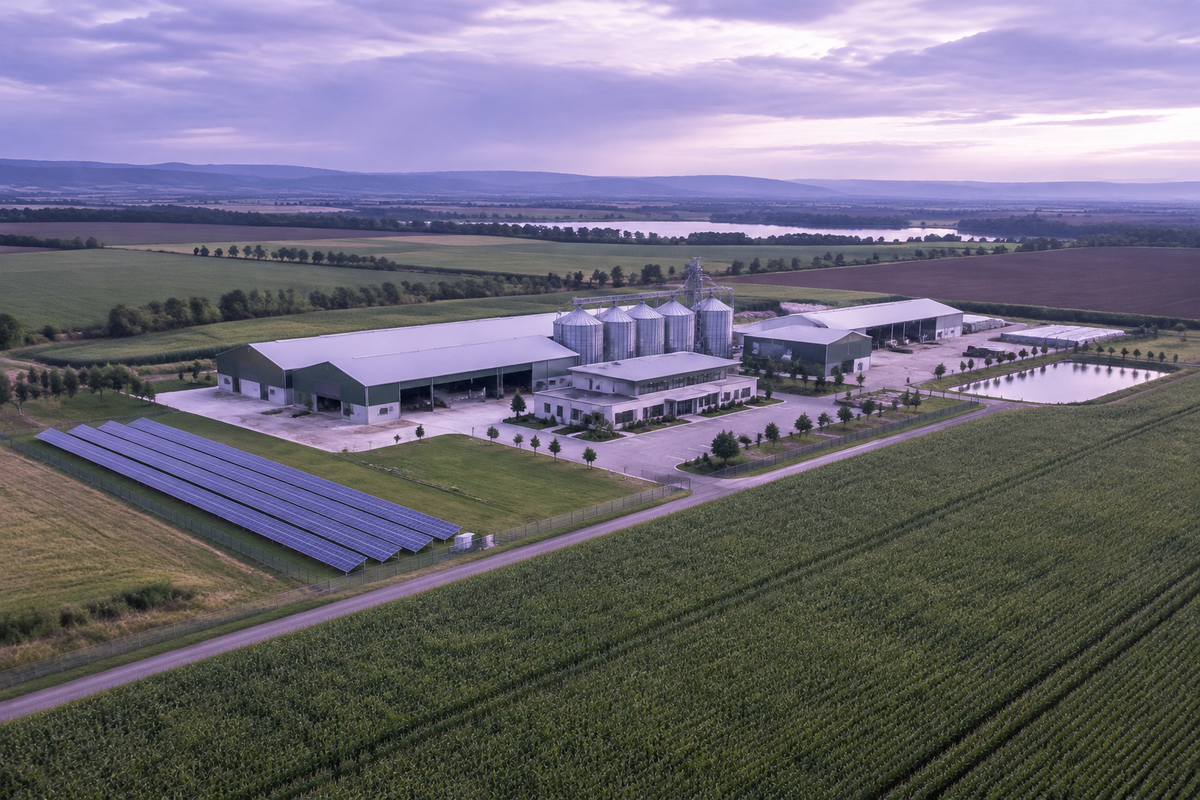
Romanian agribusiness support programs also offer up to 100% non-repayable funding for certain projects installing solar power plants for own consumption, provided the program criteria are met. This allows agricultural enterprises to invest in the energy independence of their farms and the use of renewable energy.
Using EU Directives as Tools for Developing an Agricultural Company
Pan-European support for agribusiness is delivered through effective mechanisms:
Program | Features |
Flat-rate scheme | A special value added tax regime for farms. Under the program, small agricultural raw material producers may not charge VAT on goods, but in return lose the right to reclaim input VAT. |
Common Agricultural Policy (CAP) | The EU's common agricultural policy provides subsidies as well as support in the form of payments for developing and applying "green" innovations. |
EAGF | Funding from the agricultural guarantee fund includes active anti-crisis financial assistance for farmers. |
Support for young farmers | Grants and direct financial payments for farmers under 40 who are just starting a business. |
BISS (Basic Income Support for Sustainability) | Farm funding per hectare of land, aimed at stabilizing income. |
Under the European Commission's proposal on the EU budget for 2028-2034, around EUR 300 billion is to be allocated to farmers' income support and anti-crisis measures.
The tax systems of Central and Eastern Europe offer a set of useful fiscal tools for successful entry into the agricultural sector. With proper administration and use of incentives, it is possible to gain significant competitive advantages and bring agricultural activity to a high level of profitability. The Maira Consult lawyers will help you compare tax regimes for agribusiness in the EU, choose the optimal jurisdiction based on the specifics of your activity, and determine how subsidies and financial support can be applied.