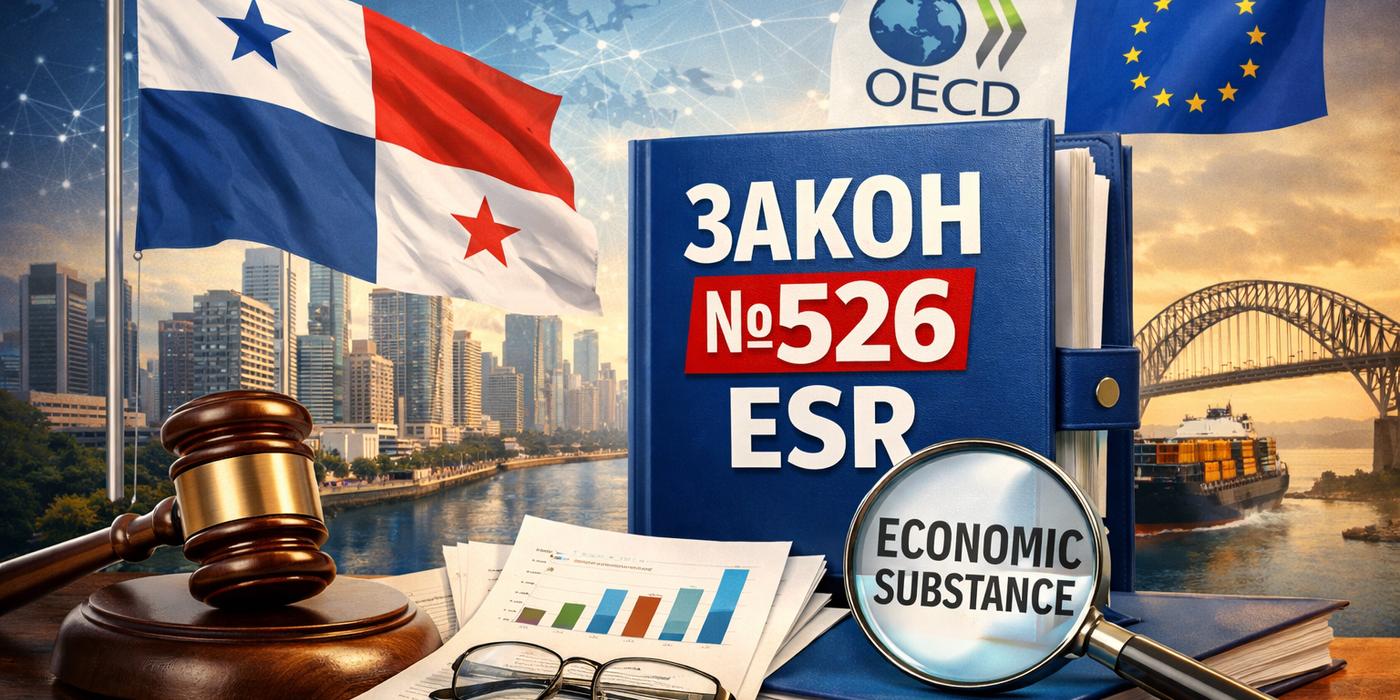
On May 28, 2026, Panama officially enacted Law No. 526, which introduces Economic Substance Requirements (ESR) for certain categories of legal entities for the first time. The new regime will be part of a large-scale reform of the country’s corporate and tax legislation aimed at harmonization with international standards set by the OECD and the European Union.
For business owners who already have a company in Panama or are simply considering company registration in Panama, the new rules may become one of the key factors when planning an international corporate structure in 2027.
Why Panama is Implementing Economic Substance Requirements

In recent years, Panama has been under close scrutiny by international organizations due to the peculiarities of its territorial tax system. The introduction of economic substance requirements aims to confirm the compliance of the Panamanian jurisdiction with international standards of tax transparency and to facilitate the country’s removal from the lists of jurisdictions that the European Union considers to require additional monitoring.
Panamanian legal and expert circles view the adoption of this document with cautious optimism:
Panama is the last major international financial center to implement economic presence requirements. This has allowed the country to draw on the experience of other jurisdictions and create more balanced legislation. Law No. 526 aligns Panama with OECD and EU standards and will help improve the country’s international reputation.
What Law No. 526 entails
The new law does not abolish the territorial principle of taxation, which remains one of the main advantages for international businesses and investors choosing to establish a company in Panama.
As before, foreign-sourced income is not subject to taxation in Panama. At the same time, certain companies are now required to demonstrate a genuine economic presence in the country to maintain this tax regime.
In effect, Panama is transitioning to a model already in place in many international financial centers, including BVI, Seychelles and Belize.
Which companies are subject to the new rules
Law No. 526 applies only if both of the following criteria are met:
the company is part of an international group of companies;
the company receives passive income from foreign sources.
Passive income may include:
dividends;
interest;
royalties;
certain types of investment income;
other income specified by regulatory acts.
At the same time, the law explicitly provides that an individual who owns a Panamanian company does not, by that fact alone, create an international group of companies.
This means that a significant portion of the classic structures used for international trade, asset ownership, or conducting business abroad may remain outside the scope of the new rules.
Situation | Application of Law No. 526 |
|---|---|
The company is owned by an individual (with no other companies in its structure) | Not applicable |
The company is part of an international group but has no passive income | Not applicable |
The company is part of an international group and receives passive income from abroad | Applicable |
Operating company with active operations in trade/services | Individual analysis required |
Panama-flagged shipping companies | Not applicable (exception) |
Foreign-flagged vessels | May apply |
Thus, Law No. 526 on Economic Substance in Panama does not apply to most traditional private structures used for international business.
What are the possible consequences of non-compliance
If a company falls under the scope of Law No. 526, but is unable to demonstrate sufficient economic presence in Panama, its passive income may lose its current preferential tax treatment.
In such a case, a final tax of 15% is expected to apply to the relevant income.
That is why international corporate groups are advised to begin analyzing their corporate structures now and assess the potential impact of the new legislation.
Special Exemption for the Shipping Industry
One of the most discussed features of Law No. 526 is the complete exemption for companies that own vessels flying the Panamanian flag.
Owners of vessels registered in the Panama International Maritime Registry may be exempt from Economic Substance requirements provided that:
they hold valid licenses and permits;
they conduct activities in the field of maritime transport;
they ensure effective management of the company from within Panama.
However, this exemption does not apply to vessels registered under the flags of other countries.
What company owners need to do right now
Although detailed regulations are not expected until September 2026, registration agents recommend that clients use the remainder of the year to bring their corporate documentation into compliance.
First and foremost, you should:
update KYC and AML documentation;
verify information on ultimate beneficial owners;
ensure proper maintenance of accounting records in accordance with Law 254;
verify the company’s Good Standing status;
notify the registration agent of any changes in ownership or business structure.
Panamanian licensed registration agents urge businesses to exercise maximum transparency in communication and emphasize:
It is impossible to protect or structure something about which there is no complete information in the registries. Clients who provide complete data and prepare in advance will have significantly more opportunities for a smooth transition to the new requirements.
New costs for owners of Panamanian companies
It is expected that starting in 2027, many licensed agents in Panama will introduce additional annual fees for administering Economic Substance requirements, which will cover structural analysis, legislative monitoring, and the preparation of necessary reporting.
Thus, the maintenance of Panamanian companies will gradually become more compliance-oriented, in line with the global trend toward tighter international tax control.
What Law No. 526 Means for Owners of Panamanian Companies
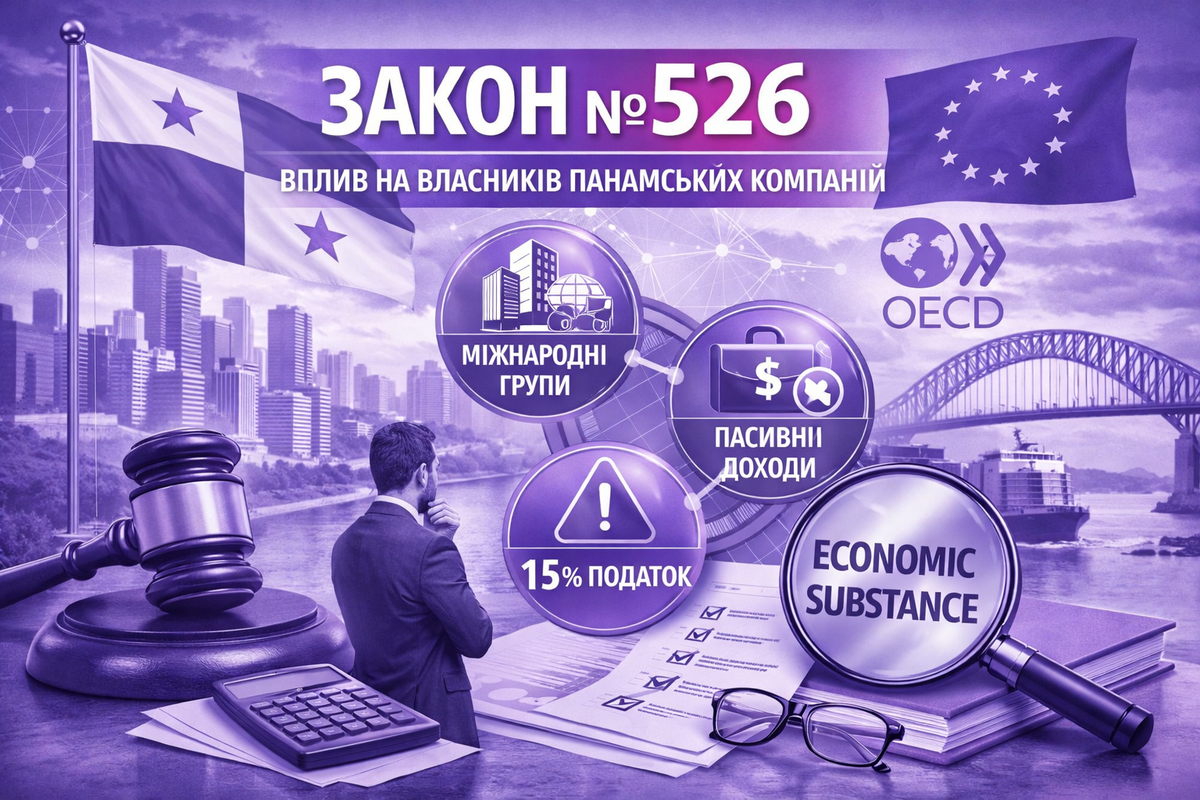
According to a partner at Maira Consult Iryna Kucheriava, the adoption of Law No. 526 is a logical step in the development of the Panamanian jurisdiction and its integration into the international system of tax transparency.
Most companies owned by individuals and not part of international groups may not be subject to the new requirements. At the same time, international holding companies, investment structures, and corporate groups are advised to conduct an audit of their corporate structure now and assess the potential impact of the new rules.
Law No. 526 has become one of the most significant legislative changes in Panama in recent years. Despite the introduction of Economic Substance requirements, Panama retains its territorial tax system and continues to be a popular jurisdiction for international trade, holding structures, and asset protection.
For business owners, 2026 will be a period of preparation, and 2027 will mark the start of the practical application of the new rules. That is why timely legal analysis and professional support remain key tools for safely conducting international business through Panamanian companies.