The operations of export companies are inextricably linked to the challenges of entering foreign markets, the legal peculiarities of foreign jurisdictions, and currency and customs risks. To address issues related to certification, foreign economic activity registration, export control, and insurance, continuous legal support for foreign companies. The international company Maira Consult highlights the top 10 mistakes made by export companies and helps eliminate obstacles to selling goods and services abroad.
Understanding the specifics of doing business in different countries is crucial for running and scaling an export business. According to statistical data, underestimating the target market and management errors are the main factors leading to business bankruptcy. According to international studies, in 80% of cases, exporting firms fail and declare bankruptcy within the first two years.
Experts at Maira Consult have analyzed statistics on the deterioration of international companies’ financial performance and are ready to identify the main reasons why export companies fail to remain competitive and lose their leadership positions.
№1: Marketing Shortcomings

For an effective marketing program, all the nuances of the international market must be taken into account. To do this, it is important to:
adapt the product (goods, services) to local standards, which may differ from domestic market standards;
study the target audience, cultural characteristics, national mindset, consumer tastes, and needs;
present the brand effectively, design packaging, and localize translations in accordance with the importing country’s standards;
assess consumer purchasing power;
conduct an analysis of local competitors;
utilize product demonstration tools: international trade shows, B2B online platforms.
A poorly structured marketing program leads to a loss of reputation in the international market and fails to meet revenue expectations.
№2: Inadequate legal support
Competent legal support is paramount in export practice legal support for foreign companies. When working with an international firm controlled by a resident of another country, special attention should be paid to two key factors.
1. Interpretation of legal norms
A correct understanding of legal permissions and prohibitions, as well as tax positions, helps avoid inaccuracies in international contracts. These aspects must be taken into account when concluding product supply contracts, so it would be helpful to seek consultations regarding controlled foreign companies from Maira Consult.
2. Obtaining certification
For exports to the European Union, it is important to obtain certification for products subject to quotas and excise duties. The main ones include:
EUR.1 (certificate of origin),
CE (certificate of conformity),
veterinary certificate,
phytosanitary certificate.
Permit documents must be obtained for a range of goods, services, and products. In particular, mandatory certifications include RoHS, CE, and FDA.
№3: Errors in calculating customs costs
In the event of incorrect customs analysis, the exporting company may face significant penalties, a halt to the movement of goods across the border, as well as additional charges on top of tax rates. There can be several causes of financial losses and delays at customs.
Error | Consequences |
Incorrect data entered in the invoice | Errors in quantity, description, weight, or item number, or discrepancies with the packing list, may be interpreted by customs authorities as an attempt to import prohibited goods, underreport duties, or conceal the actual price of the goods. |
Errors in the declaration | Incorrect declarations always result in fines for the exporting company. |
Incorrect product classification | Inaccurate information in the foreign economic activity commodity nomenclature leads to incorrect VAT calculations and incorrect payment of duties. |
Non-payment of customs duties | If duties are not paid, the cargo may be seized, and the export transaction may be completely blocked. Even a minor underpayment can result in significant fines. |
Inaccuracies in the specified country of origin of raw materials (goods, products) | An incorrectly indicated country of origin may result in the loss of supply benefits and zero customs duty rates. |
According to research by the State Customs Service of Ukraine and business associations, in 40% of cases, discrepancies in documentation and incorrect classification of goods under the Ukrainian Classification of Goods for Foreign Economic Activity (UKT ZED) are the causes of prolonged delays in the export of goods. Prompt correction of errors helps avoid cargo seizure at the border. To avoid problems at customs, it is recommended to hire a qualified broker or engage a reputable firm to provide legal support for foreign companies.
№4: Mistakes in Applying Incoterms Rules
Registration Incoterms allows for the distribution between the buyer and the seller of:
the rights of the parties;
the obligations of the parties;
the scope of transportation costs;
the risks associated with product delivery and the redistribution of risks at a specific point in time.
Properly drafted Incoterms enable an exporting company to avoid the disputes that often arise in international trade.
№5: Lack of Foreign Economic Activity Registration
Every company engaged in foreign economic activity and exporting products must be registered as a participant in foreign economic activity. To do this, it is necessary to obtain accreditation from the customs authority as a participant in foreign economic activity, sign a foreign economic contract, and open a foreign currency account.
If, for any reason, a company is unable to register for foreign economic activity, export operations can be outsourced. Under this scheme, the purchase and sale takes place domestically with an intermediary firm that assumes all responsibilities for exporting the goods to a foreign country.
№6: Logistical Challenges
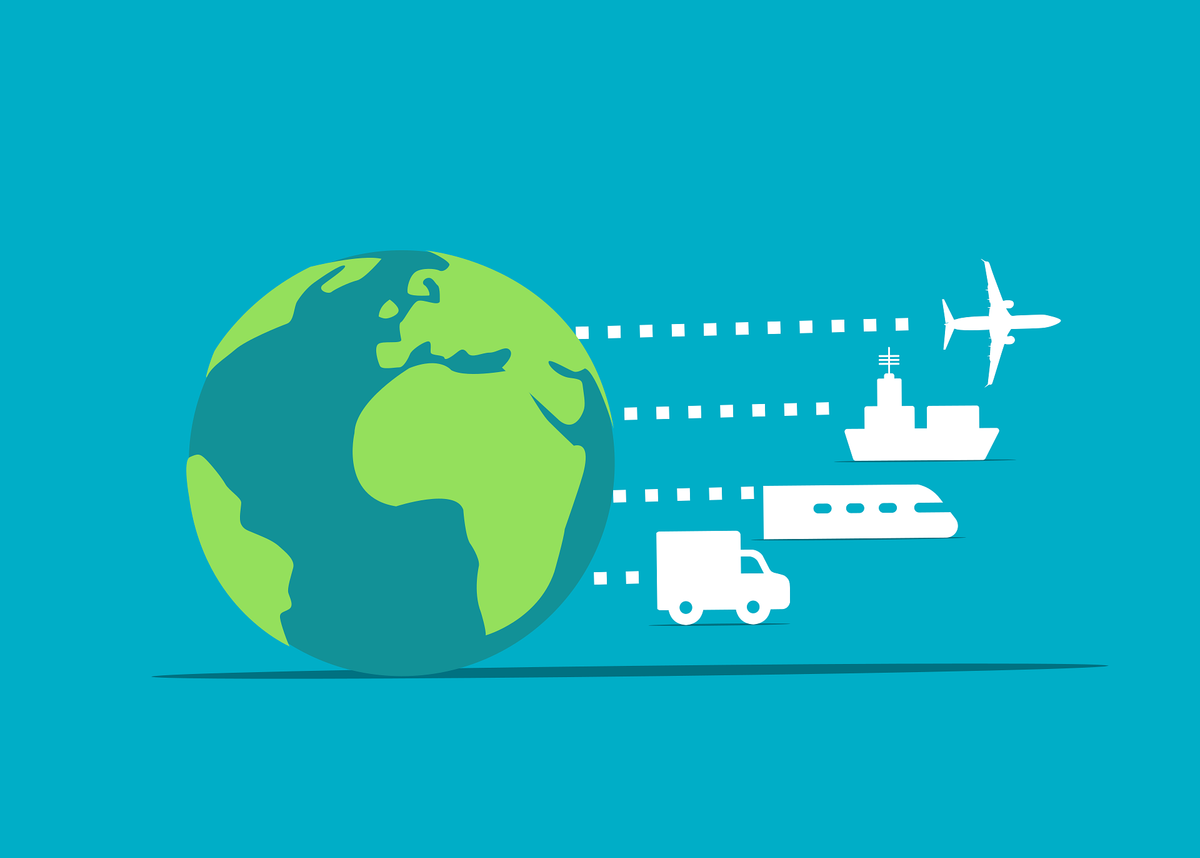
Logistics is one of the key elements of managing and forecasting international sales for an export company. Logistics activities must cover the entire spectrum of production, transportation, packaging, and documentation tasks:
ensuring production capacity (regularity and volume) sufficient to meet demand for goods in a specific country;
provide professional legal support to foreign exporting companies regarding customs clearance of cargo and its border crossing;
use a mode of transport that minimizes costs and delivery time to the end consumer;
use specialized packaging (containers) for long-distance transport of products;
for special cargo, use containers that meet international standards;
monitor exports in real time and provide an information platform for all participants in the supply chain.
Improperly organized logistics, transportation, and storage of goods lead to financial losses, capital tied up, cargo damage, and damage to the export company’s reputation abroad.
№7: Ignoring cargo insurance
Risk management is part of CFS legal support and is a crucial aspect of minimizing financial losses. An insurance contract provides protection for finances and export businesses against:
loss or damage to cargo;
non-payment by counterparties in the recipient country;
losses related to force majeure;
non-payment by foreign buyers due to their bankruptcy.
Insurance is a key tool for export companies to control and manage economic risks. Insurance provides coverage for losses and compensation for the value of shipped goods in most standard and non-standard logistical, political, and commercial situations.
№8: Underestimation of export control in Ukraine
For companies owned by Ukrainian residents, it is important to be aware of the specifics of export controls at the border. Strict regulations apply to the export of dual-use products and military goods. Depending on the severity of the violation, failure to comply with the rules may result in administrative penalties, sanctions, license revocation, confiscation of goods, or criminal liability for the exporting company. Timely legal support for foreign companies helps avoid such difficulties.
№9: Incorrect Calculation of Export Revenue in Foreign Currency
Exchange rate fluctuations are one of the main causes of financial losses for export firms. In the absence of hedging, exchange rate fluctuations can lead to a loss of profitability. Upon conversion, export revenue may be significantly lower than planned. In some jurisdictions, higher tax rates apply to profits resulting from exchange rate differences. To mitigate risks, international corporations use netting, futures, and forward contracts, and include clauses in contracts allowing for price adjustments due to currency fluctuations.
№10: Use of Unsecured Forms of Payment
Working on open account terms carries the risk of non-payment or indefinite payment delays. Operating without prepayment from the customer forces the exporter to maintain a large financial reserve to cover all logistics costs. In the event of disputes, litigation in a foreign jurisdiction will be extremely costly. Using a letter of credit, collection, or bank guarantees helps avoid these issues.
Export activities require knowledge of customs, currency, and international regulations. Maira Consult’s lawyers recommend seeking qualified advice during the stages of contract negotiation, preparation of customs documents, obtaining certifications and licenses, and planning logistics routes.