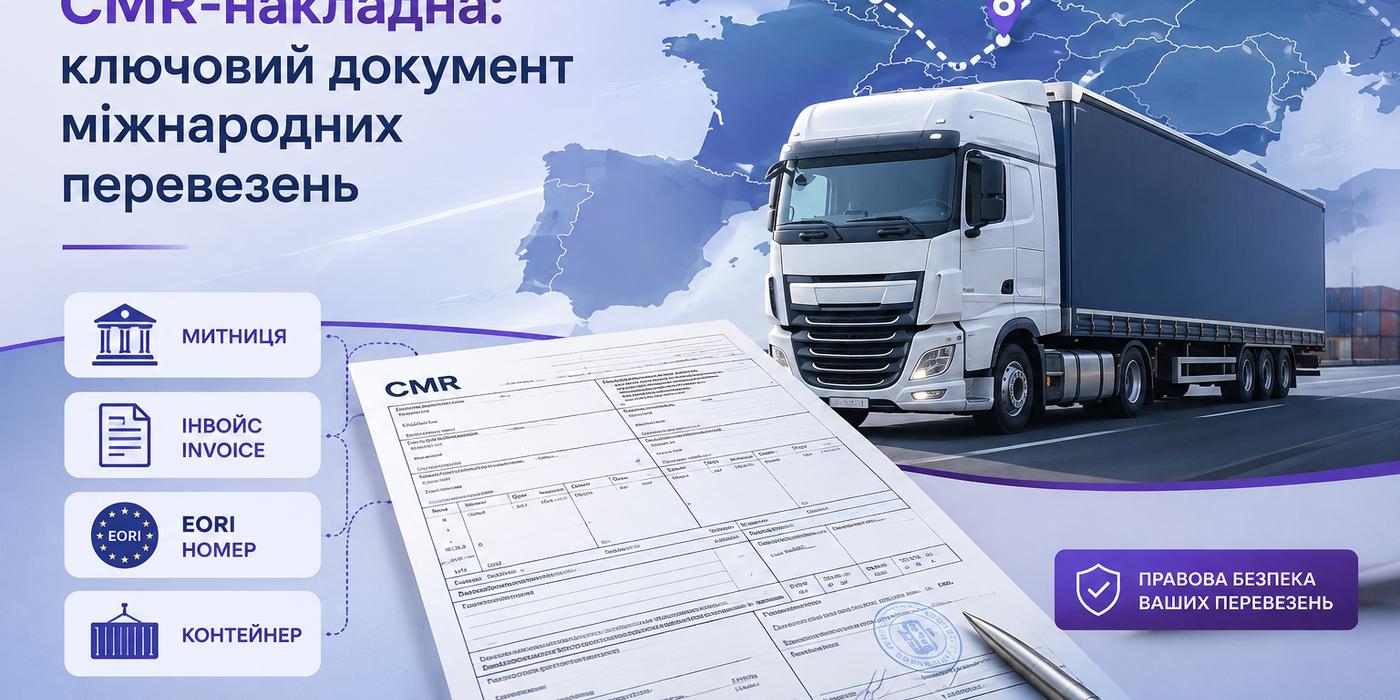
The CMR consignment note is the main accompanying document for cargo transported by road internationally across customs borders. This document establishes the existence of contractual relations, the transfer of goods to the driver, and the allocation of liability between the parties. The international law firm Maira Consult provides legal support to logistics companies, with experts helping to understand in detail what a CMR consignment note is and why it is important for logistics, as well as how to use and complete it.
Activities related to the international transportation of goods cannot be carried out without the standardized CMR form. This document is used for road freight transportation across borders between countries. It contains important information about the parties involved in the transportation process: the consignor, carrier, and consignee, as well as details about the cargo and its condition.
Legal Basis of the CMR
The main document governing the organization and regulation of international freight transportation is the Convention on the Contract for the International Carriage of Goods by Road . It determines:
what data and details a CMR consignment note for logistics must contain;
the rules for completing the form;
the number of copies;
the number of signatories.
Maira Consult specialists draw commercial actors' attention to the fact that the CMR is completed and used for international transportation between countries that are parties to the Convention.
The CMR consignment note itself is not the only document submitted to the customs authority. For customs clearance, the CMR is used together with other accompanying documents, including the invoice and packing list.
What Functions Does a CMR Consignment Note Perform for Logistics?

To understand in greater detail what a CMR consignment note is, it is necessary to examine its main functions:
Confirmation of the transport contract signed by the parties.
Recording the transfer of the cargo, including its condition, quantity, weight, and other characteristics.
Recording the movement of the cargo, including the type and details of the vehicle and the approved route.
Recording the estimated time allocated for transit.
Allocation of liability among the carrier, consignor, and consignee, the rules for submitting claims, and the extent of liability in the event of loss of or damage to the cargo.
Professional legal support for a logistics company and error-free CMR documentation prevent cargo from being held up at customs and disruptions to logistics planning.
Consequences of Incorrectly Completing a CMR Consignment Note
When examining the organization of international transportation, it is important to understand what a CMR consignment note is and what role it plays at customs. As the principal transport document and the foundation of the legal relations between the parties, it confirms the legality of moving products from one country to another, as well as the existence of contractual relations between the parties to the transportation process. Without it, it is impossible to identify the goods or verify that the declared route is being followed. In this form, customs officers record the fact that the cargo has passed inspection and has been released from the country. The CMR consignment note for logistics is the basis and source of the information transferred to the customs declaration.
Any incorrect data may result in the following consequences:
vehicle downtime along the route, which may last from several hours to 3-4 days;
damage to goods requiring specific storage conditions due to delays at the customs control point;
financial losses in the form of unforeseen expenses for paid parking at customs;
penalties for incorrect information about the weight or codes of the cargo;
fines for overloading or non-compliance with dimensions;
loss of the exporter's reputation and the logistics company's image.
According to customs authorities' statistics, common causes of downtime include discrepancies between net and gross data, inconsistencies with the invoice, discrepancies in the information contained in the export declaration, a typographical error in the logistics company's EORI number, or errors in the HS codes.
Specifics of Completing a CMR
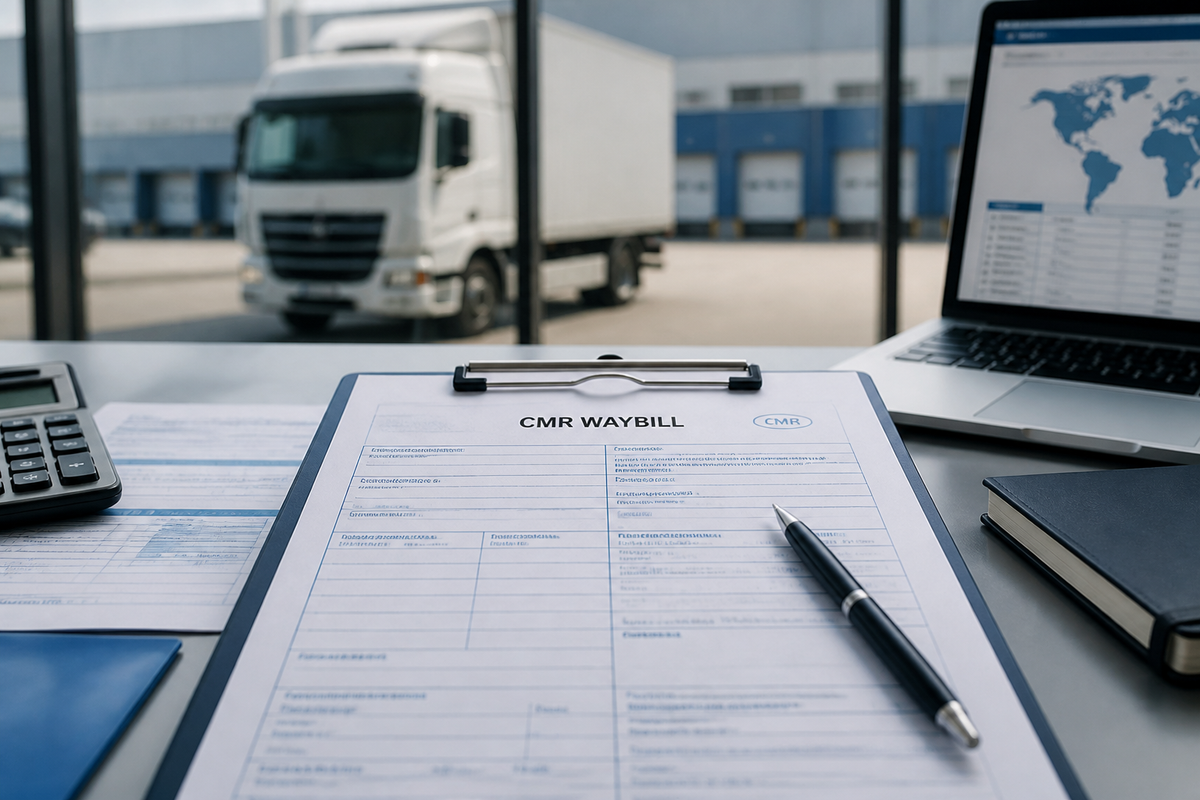
Understanding the structure of a CMR consignment note makes it possible to complete the document correctly and avoid errors. The specifics and rules for completing the document are presented in the table.
Items | Information |
1 | Information about the consignor:
If a third party participates in the contract as a guarantor, the phrase “by order of” is entered. |
2 | Consignee details:
|
3 | The country where unloading will take place, including the delivery address. |
4 | The country where loading takes place, including the address and exact departure time for the route. |
5 | Document package:
When transporting industrial, animal, or plant products, a quality certificate, veterinary certificate, or quarantine certificate, as applicable, is added to the main documents. |
6 | Class and subclass of the goods. When transporting dangerous products or raw materials, the codes are specified in accordance with the European Agreement concerning the International Carriage of Dangerous Goods by Road. |
7 | Number of packages. |
8 | Details of the packaging material, such as a box, pallet, crate, bag, container, barrel, or other type of packaging. |
9 | Name of the goods. |
10 | HS code. |
11 | Weight (gross). |
12 | Volume. |
13 | Customs inspection and clearance point for the cargo, including the address. |
14 | Container or semi-trailer registration number, provided it is to be returned from the consignee's country. |
15 | Incoterms rules, specifying groups E, F, C, and D. |
16 | Carrier details:
|
17 | If the services of several carriers are engaged, the details of all legal entities involved are entered. |
18 | Comments on the condition and appearance of the goods, or on discrepancies in the marking or numbering of the cargo package. If no information is entered in this item, it is generally assumed that the goods were in excellent condition when loaded. |
19 | Service fee in monetary terms, that is, the freight charge. The line remains blank when the delivery price is stipulated and fixed in the contract. |
20 | Specific transportation conditions, including speed, temperature, humidity, requirements for airtightness, oversized dimensions, and hazard class. |
21 | Information about where and when the CMR consignment note for logistics was completed, including the place, date, and time of completion. |
22 | The date and time of actual loading and departure of the vehicle. This information must be certified by the consignor's signature and stamp. |
23 | When the cargo is accepted, the date, signature, and stamp of the carrier's representative are entered. |
24 | The date and time when the vehicle arrives at the unloading point and departs after the goods have been unloaded. The consignee must confirm the accuracy of the information with a signature and stamp. |
25 and 26 | When a trailer and tractor unit are used, their registration numbers are entered. |
The consignor completes items 1 to 15, 21, and 22. The carrier enters information in boxes 16-19, 25-29, and 23 before dispatch, and in boxes 19, 27-29 after delivery has been completed.
As a legal requirement, the CMR consignment note for logistics must be completed in at least three copies in paper form. All forms must be strictly identical. The first copy is given to the consignor, the second accompanies the cargo during transportation, and the third remains with the consignee. When several international transport companies are involved, the number of copies increases.
Any errors in completing the form may cause serious problems at customs. Incorrect information about a consignee listed in the CMR who has not been assigned an EORI number for logistics may result in the vehicle being stopped at the border for an indefinite period until the circumstances are clarified. To avoid problems, it is advisable to arrange legal support for the logistics company in advance.
A lack of experience working with the main documents required for the international transportation of cargo by road may result in serious losses. If a company does not have sufficient experience completing CMR consignment notes and accompanying documents, it should seek professional legal support, including CMR completion and registration of an EORI number for a logistics company, from qualified lawyers at Maira Consult.