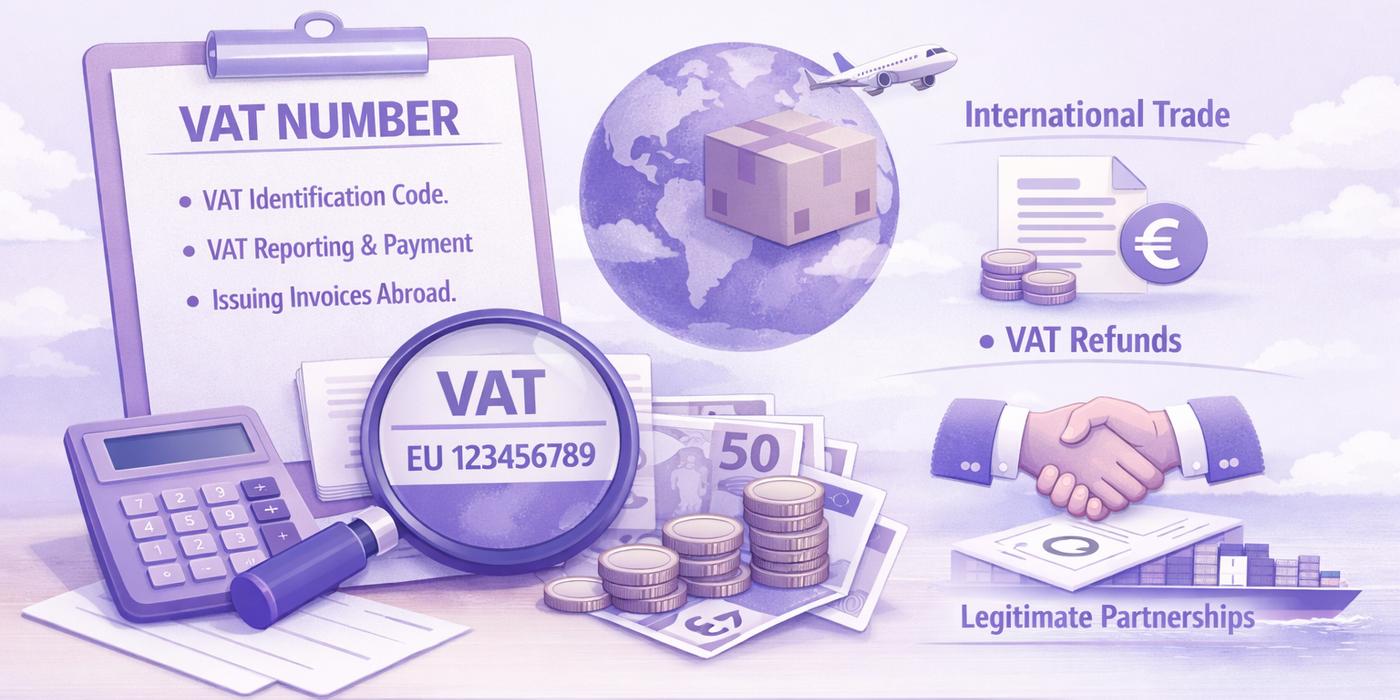
VAT number is a mandatory tax identifier for companies planning to operate in the European Union market. In 2026, having a VAT number is critical for exporters, e-commerce businesses, and international companies with cross-border operations.
The most common mistake that entrepreneurs make when creating a business abroad is ignoring or not knowing enough about the country's taxes. For example, everyone pays attention to the corporate tax that a foreign company will pay based on the results of the financial year, but they do not always pay attention to the fact that it is necessary to obtain a VAT number for the company to operate correctly.
It is especially important to obtain such a number when conducting export and import operations. In this article, we advise you to find out what a VAT number is, how to obtain it in the EU, when it is mandatory, and how to avoid penalties when exporting to the European Union.
What is a VAT number, who needs to get it and when
VAT number (Value Added Tax number) is an individual tax identifier of a value added tax payer that is assigned to a company after it is registered in one of the EU countries. A VAT number is mandatory for conducting legal activities in the European market, in particular for export-import and intra-European B2B transactions.
A VAT number allows you to apply a 0% VAT rate when supplying goods between EU countries (subject to legal requirements), and also confirms the tax status of the company when checked by counterparties.
The VAT system was introduced in the EU in the 1970s to harmonize value added tax and control cross-border transactions. Today, a VAT number for exporters is a key tool for tax security and legitimacy of the company's activities.
What is VIES?
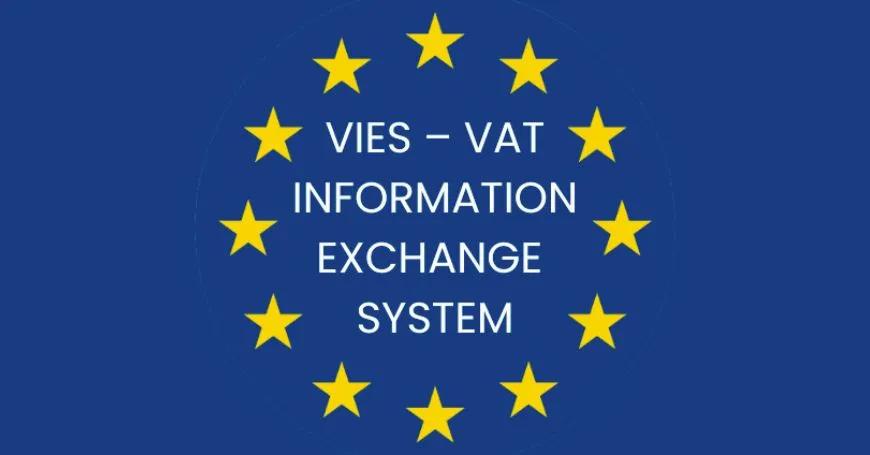
VIES (VAT Information Exchange System) is an electronic system for exchanging information about VAT payers within the European Union. It makes it possible to check whether a company or entrepreneur is registered as a VAT payer for intra-European transactions between EU countries.
Using the online search in the VIES system, users can quickly check the validity of a counterparty's VAT number and make sure that it is officially registered to do business in the European Union.
The system was created by the European Commission, and the information in it is generated on the basis of data coming from the national registers of VAT payers of EU member states. This allows to ensure the relevance and reliability of the verification of enterprises engaged in cross-border trade within the EU.
The main functions of the VIES system:
verification of the validity of the counterparty's VAT number;
confirmation of VAT payer status for intra-European transactions;
facilitating the application of the zero VAT rate for intra-European supplies of goods;
reducing the risks of tax fraud (e.g., carousel fraud);
supporting the exchange of information between tax authorities in EU countries.
Validation of VAT number in VIES: mandatory cases for business
Before applying the zero VAT rate, you need to check the VAT number of the counterparty in the VIES system. If the number is not valid, the tax authorities may charge additional VAT and impose penalties.
For intra-European B2B transactions, a supplier can apply a 0% VAT rate if:
Both companies are registered as VAT payers;
The buyer's VAT number is valid in the VIES system;
The goods are actually moved between EU countries.
The format of the VAT number in the EU
The VAT identification number in the European Union has a standardized form: two letters of the country code + a numeric (sometimes alphanumeric) combination.
For example: EE123456789 (Estonia), PL1234567890 (Poland).
For Ukrainian exporters or companies from third countries, a VAT number is not a formality, but a strategic tool for legal work in the EU market without losing 19-27% of VAT in the price structure.
VAT number verification
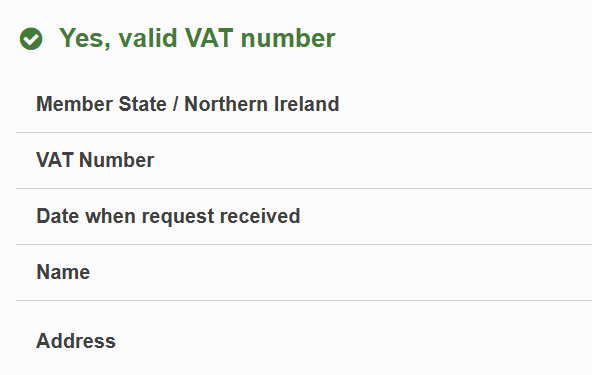
The official service for verifying VAT numbers is available atthe website of the European Commission.
This tool allows you to check the validity of the VAT number of a company registered in any EU country.
Mandatory and voluntary VAT number registration
Quite often, after registering a company in the EU, a client wants to immediately obtain a VAT number. However, to obtain such a number in most EU countries, it is necessary to confirm the existence of economic activities or future transactions that are subject to VAT taxation.
In such cases, an application for voluntary VAT registration is submitted. The tax authorities may require proof of future activities, such as:
contracts with counterparties;
business plan;
invoices or commercial offers.
In other cases, mandatory registration as a VAT payer is applied, which occurs upon reaching the threshold of annual taxable turnover established by law.
Regulation of obtaining a VAT number in the EU
The obtainment of a VAT number in the European Union is regulated by EU Council Directive 2006/112/EC of November 28, 2006 on the common system of value added tax (VAT Directive).
This Directive sets out:
the general principles of VAT taxation in the EU;
the rights and obligations of taxable persons;
the rules for registering taxable persons and the thresholds for mandatory registration;
the rules for applying the 0% rate to intra-EU supplies of goods.
Each EU country implements the provisions of this Directive through national legislation, establishing:
specific turnover thresholds;
registration procedures;
documentation requirements;
tax reporting rules.
Thus, the basic principles of the VAT system in the EU are harmonised, but specific requirements may vary from country to country.
Why a VAT number is critical for exporters in 2026
In 2026, scrutiny by EU tax authorities has been significantly stepped up, and checking counterparties via the VIES system has become standard practice for most European companies.
Having a valid VAT number ensures that a company can:
1. Apply a 0% VAT rate for B2B supplies within the EU
Under the reverse charge mechanism, the supplier may issue a zero-rated invoice, and the tax liability passes to the buyer in their country of registration. Without an active VAT number, this model is not possible.
2. Confirmation of tax status in VIES
European partners always check the counterparty in VIES. If the number does not appear in the system, the transaction may be blocked or require the application of local VAT.
3. Right to reclaim input VAT
A VAT-registered company can reclaim VAT paid on expenses within the EU: logistics, warehouse rent, marketing services, participation in trade fairs, etc.
4. Obligations when storing goods in the EU
If goods are stored in warehouses (including Amazon FBA or local fulfilment centres), VAT registration in the relevant country is mandatory even if there are no sales initially.
5. Simplification of customs procedures and obtaining an EORI number
A VAT number is often a prerequisite for obtaining an EORI number and ensuring proper customs clearance of goods in the EU.
6. Protection against fines and financial risks
Failure to register may result in additional VAT charges, fines (which in some countries can reach 100% of the tax amount), penalties, and even the freezing of bank accounts or marketplace accounts.
VAT in the EU for exporters in 2026: thresholds, rates and examples of numbers
Country | Threshold of mandatory registration (residents) | Voluntary registration | Base VAT rate | Example of VAT number | Comments for exporters from Ukraine |
Estonia | €40,000 | Yes | 24% | EE123456789 | Fast registration (2-4 weeks), low requirements for documents, popular among Ukrainians. |
Poland | PLN 240,000 (≈ €56,000) from 2026 | Yes | 23% | PL1234567890 | Mandatory for warehousing (FBA). Lowest penalties for late registration. |
Cyprus | €15,600 | Yes | 19% | CY12345678L | Low threshold, slower registration process, suitable for holdings. |
Hungary | Almost immediately after registration | Limited | 27% | HU12345678 | The highest VAT rate in the EU, registration is required immediately after the company is established. |
Germany | €25,000 (previous year) + forecast < €50,000 | Yes | 19% | DE123456789 | Strict document audit, large domestic market, accuracy of invoices is important. |
France | Goods ≈ €93,600, services ≈ €41,250 | Yes | 20% | FR12345678901 | High requirements for physical presence and address verification. |
Italy | €85,000 | Yes | 22% | IT12345678901 | Mandatory for e-commerce, intra-European deliveries and OSS. |
Spain | No threshold | Yes | 21% | ESX1234567X | Often used for OSS system, fast registration. |
Lithuania | €45 000 | Yes | 21% | LT123456789 | Fast registration, but more documentary checks. |
Latvia | €50,000 | Yes | 21% | LV12345678901 | Similar to Estonia, less popular among Ukrainian exporters. |
For non-residents (Ukrainian companies), the threshold is usually €0 for local deliveries, storage of goods or certain services - registration is required immediately.
Common mistakes made by exporters after registering a company abroad
Even after a successful registering a company in the EU, entrepreneurs often make mistakes related to VAT registration and tax liabilities. This can lead to significant financial losses, fines, and even blocking of the company's activities.
The most common mistakes made by exporters are:
1. Ignoring the threshold of mandatory VAT registration
Many companies start actively selling goods or services in the EU, but do not monitor the threshold of mandatory VAT registration. As shown in the table of thresholds, in Hungary, a VAT number is required immediately after company registration, while in Estonia it should be obtained only after the turnover exceeds €40 000. Failure to comply with these rules often leads to additional VAT charges, fines, and financial losses for exporters and e-commerce businesses.
2. Buying a "ready-made" VAT number without any real activity
Sometimes entrepreneurs try to buy a company with a VAT number without any actual economic activity.
EU tax authorities actively check such companies. In most cases, this leads to:
deactivation of the VAT number in the VIES system;
additional inspections;
possible blocking of accounts.
3. Warehousing goods in the EU without VAT registration
If a company places goods in warehouses in the EU (for example, Amazon FBA or local fulfillment centers), it often needs to have VAT registration in this country.
The absence of such registration can lead to:
Fines from €5 000 to €10 000 or more;
Blocking of marketplace accounts;
Tax audits.
4. Issuing zero-rated invoices without checking VIES
Some companies apply a 0% VAT rate for intra-European transactions without checking the VAT number of the counterparty.
If the buyer's VAT number is not valid in the VIES system, the tax authorities may:
calculate local VAT;
apply fines;
require adjustments to invoices.
5. Ignoring special tax regimes (SME / OSS)
The EU has special regimes for small businesses and e-commerce:
SME scheme - simplification for small companies;
OSS (One Stop Shop) - a VAT payment system for e-commerce.
Improper use or disregard of these regimes may result in:
Overpayment of taxes;
Complicated reporting;
Fines for incorrect filing of declarations.
6. Failure to submit tax reports
After receiving a VAT number, a company is obliged to submit regular tax reports, even if it temporarily stops operating.
The most commonly submitted documents are:
monthly or quarterly VAT declaration;
EC Sales List for intra-European transactions.
Ignoring the reporting can lead to:
fines;
suspension of the VAT number;
blocking of bank accounts.
In practice, such mistakes lead to real financial losses. Below is an example from our practice.
Practical case: no VAT number for a transport company (export to the EU)
One of our clients, an Estonian transport company engaged in international cargo transportation, had been working without a VAT number for a long time.
Previous consultants mistakenly convinced the client that registration as a VAT payer was not required because the goods were transported from Ukraine to China. However, in fact, the logistics route passed through a port in Romania (Constanta), which created a tax connection with the EU.
In the process of analyzing the client's work, we found out:
The presence of European counterparties, in particular MAERSK, to which payments were regularly made;
Exceeding the turnover threshold (€40,000+) for VAT registration in Estonia;
The presence of Estonian counterparties in the chain of transactions;
Incorrect execution of invoices, namely the lack of information about the country of registration of the company;
The actual use of EU infrastructure (port in Romania).
We conducted a comprehensive tax analysis and:
proved to the Estonian tax authorities that the goods were transported in transit without import (without customs clearance);
prepared explanations of the nature of the operations and the logistics chain;
corrected the approach to the execution of invoices and the client's accountant reworked all invoices;
initiated and supported the registration of a VAT number.
As a result of our joint work, specialists of the international law firm Maira Consult, an Estonian accountant and the client's accountant:
the company successfully obtained a VAT number;
the company managed to avoid additional VAT charges and fines;
the business continued to operate in the EU in a legal and safe tax model.
Attempt to obtain a VAT number through a virtual office in Romania
A Ukrainian electronics seller tried to obtain a VAT number in Romania using a virtual office in Bucharest. The tax authorities refused due to the lack of actual substance: no office, no staff, and no real activity. All operations were carried out through warehouses in Poland (Amazon FBA).
What did the Romanian tax authorities pay attention to and what you need to do to avoid being denied VAT in the EU:
Virtual office without substance for VAT in the EU is risky;
VAT registration must reflect the real place of business;
Without a substance, VAT does not protect against fines and account blocking.
Costs and peculiarities of working with a VAT number
It is important to understand that obtaining a VAT number is not only a formal procedure but also additional operating costs for the company.
After registering as a VAT payer, a business must comply with a number of tax requirements that involve regular interaction with tax authorities.
The main costs and responsibilities include:
The cost of obtaining a VAT number (in some countries, the procedure may require the involvement of a tax consultant);
payment for accounting support, as the company must keep records of VAT transactions;
filing VAT declarations (monthly or quarterly, depending on the country);
Filing VIES reports for intra-European B2B transactions;
Preparation and storage of primary documents for possible tax audits.
In fact, the company pays not only for standard accounting services, but also for additional VAT administration, which includes control of invoices, cross-border transactions, and tax reporting.
Correct invoicing when working with VAT
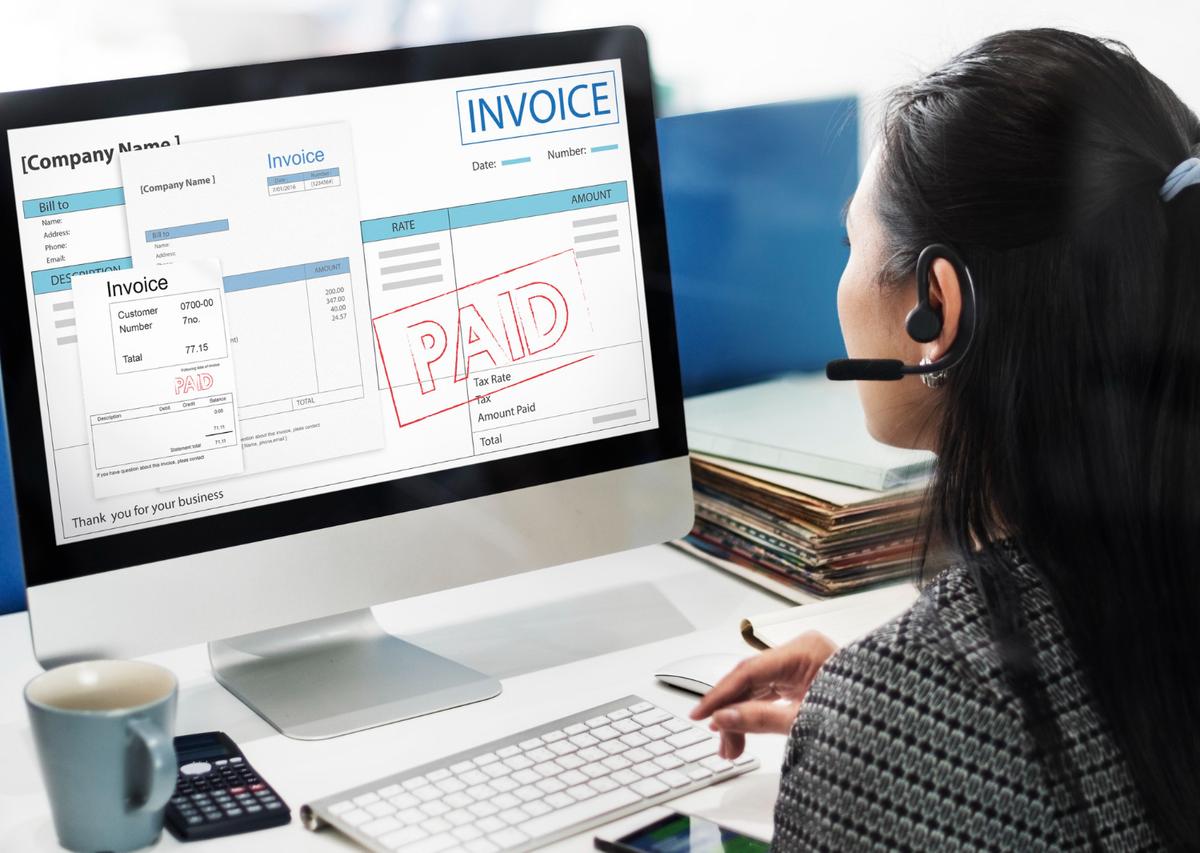
In order to avoid tax risks and cancellation of the VAT number in the EU, it is important to correctly issue invoices for transactions within the EU.
Invoices should include:
VAT number of the supplier;
VAT number of the buyer;
country of registration of both parties;
correct wording for reverse charge or zero-rated supply;
confirmation of cross-border delivery of goods.
Incorrect invoices can lead to additional VAT charges, fines, or loss of the right to apply the zero rate.
VAT when storing goods in the EU
Special attention should be paid to companies that sell goods through marketplaces or use warehouses in the European Union.
If goods are physically stored in a particular EU country (e.g., Amazon FBA warehouses), the company usually has to:
obtain a VAT number in that country;
file local VAT reports;
correctly declare the movement of goods between warehouses in different EU countries.
Ignoring this requirement often leads to tax audits and significant fines.
What is OSS (One Stop Shop) and when is it needed
OSS (One Stop Shop) is a special tax regime in the EU that allows companies to declare and pay VAT for all sales in different EU countries through one state of registration. This is one of the key tools for VAT optimization for e-commerce businesses in the EU.
When OSS is used:
B2C sales to different EU countries;
e-commerce business;
turnover over €10,000.
Using OSS allows you to avoid VAT registration in each country separately.
How to get a VAT number in the EU in 2026
The procedure for obtaining a VAT number includes:
1. Registration of a company in the EU
2. Submitting an application to the tax authorities
3. Confirmation of economic activity
4. Obtaining a VAT number (2-8 weeks)
Depending on the country of obtaining a VAT, the conditions may be stricter, including the provision of contracts, invoices or a business plan.
Are there any jurisdictions without VAT?
It is important to understand that not all international financial centers use the value added tax (VAT) system. In a number of jurisdictions, this tax is not applied at all, or other indirect taxes are applied instead.
These territories include, in particular:
Singapore - another tax, GST (Goods and Services Tax), is applied, which operates on a similar principle but has a different administration system.
We should also mention the United States of America, where the classic VAT is not applied. Instead, the United States has a sales tax system.
Sales tax has a different structure compared to VAT:
The tax is charged only at the final stage of the sale of goods or services to the consumer;
Rates are set at the level of states and municipalities;
In different states, the tax rate may vary significantly or even be absent.
For example, in some US states (such as Delaware, Oregon, Montana, and New Hampshire), sales tax does not apply at all.
In non-VAT jurisdictions, companies do not receive a VAT number because there is no VAT system. Instead, other tax mechanisms or local taxes are used.
That is why such jurisdictions are often used for:
International trade;
Holding structures;
IT business and digital services;
Structuring global companies.
However, it should be borne in mind that even if a company is registered in a VAT-free jurisdiction, when operating in the European Union, it may still be obliged to obtain a VAT number in the relevant EU country where the goods or services are actually supplied.
Practical advice for exporters
Based on our experience in advising international companies, we can offer the following recommendations to help you avoid VAT issues:
Before choosing a country, take all taxes into account. Don’t limit yourself to corporation tax or the advice of a partner who has been operating in this way for many years. Seek advice from a local accountant and explain your business model to them before launching your business. Don’t skimp on this – mistakes can result in significant fines.
Plan your VAT registration before you start selling. This will help you avoid delays in issuing invoices and opening accounts with banks and payment systems.
Don’t rely solely on AI and chatbots. They provide general advice but do not take into account all the nuances of local legislation, tax practices and the specifics of your business.
Check your counterparty’s VAT number in VIES. This is standard practice for B2B transactions in the EU and helps avoid the risk of transactions being blocked.
Monitor the location of your goods. If your warehouse is located in another country, this often means you’ll need to register for VAT locally.
Maintain proper documentation. Keep invoices, transport documents, delivery notes and bank statements.
Work with an experienced accountant. International VAT can be complex, and errors in reporting can lead to fines and financial losses. Consult a local accountant, as errors in reporting can result in significant financial losses.
Demonstrate your company’s economic presence. Actual business activity, the presence of an office, warehouse, staff and bank accounts are critical for operating legally and obtaining a VAT number.
Keep a close eye on changes in legislation. VAT rules in the EU change every year – adapting in good time helps avoid fines and the blocking of accounts on marketplaces.
Conduct an audit and prepare for launch. Even before your first sale, check your business model, documents and transactions. This will help you avoid mistakes, fines and lost sales due to VAT or marketplace account suspensions.
VAT number is one of the key tools for companies operating in the European Union market. For exporters, it provides an opportunity to legally conduct cross-border transactions, apply a zero VAT rate, work with European partners and avoid tax risks.
At the same time, obtaining a VAT number is not just a formality, but a part of comprehensive tax planning. Companies should take into account the registration rules, reporting requirements, correct invoicing, and the specifics of working with marketplaces or warehouses in the EU.
Correct business structure planning, timely VAT registration, and professional accounting support allow entrepreneurs to operate in the European market without the risk of fines, account blocking, or tax surcharges.